Why July–September 2026 Is the Best Season for Bermuda Sod in Tulsa, Broken Arrow & Coweta
When Root Systems, Environment, and Supply Flow Are Aligned — Take Advantage
If you’re planning to install Bermuda sod in Tulsa (74133), Broken Arrow (74012), Coweta (74429), Jenks (74037), or Sapulpa (74066), you’re entering the most effective window for establishment and long-term success. From a production and transplant perspective, the July–September timeframe is when the plant’s biological readiness and field conditions come together, offering peak viability for turf transplant.
Whether you’re managing a full-yard DIY project or refreshing bare areas, this isn’t just about timing your schedule—it’s about timing the plant’s transition phase to maximize establishment and minimize setbacks.
? Root Readiness in July, Stability by September
Bermuda sod is a vegetative crop, and like all transplants, success hinges on how well it transitions from propagation bed (sod farm) to final environment (your soil).
Here’s what happens month by month:
July: Root Ignition
- Soil temps in 74133 (Tulsa) and 74012 (Broken Arrow) range from 75–90°F, activating immediate rooting upon contact.
- High heat and consistent sunlight support strong top growth and quick canopy closure.
- Daily irrigation (2–3x/day) offsets transplant stress and maintains moisture near new root tips.
August: Expansion Phase
- Bermuda enters lateral spread and deeper anchoring.
- Watering shifts from frequency to depth. This is where DIY installers must begin transitioning to once-daily soaks.
- Grass begins resisting pull, signaling root integration with native soil.
September: Structural Hardening
- Cooler night temps enhance root depth, energy storage, and system hardening.
- Minimal heat stress allows the sod to mature fully before dormancy.
- Light mowing and nutrient feeding can begin without compromising turf resilience.
Each month builds on the last. Success in September depends on planting in July or August.
? Fresh Sod Requires Precise Handling: Pickup & Delivery Best Practices
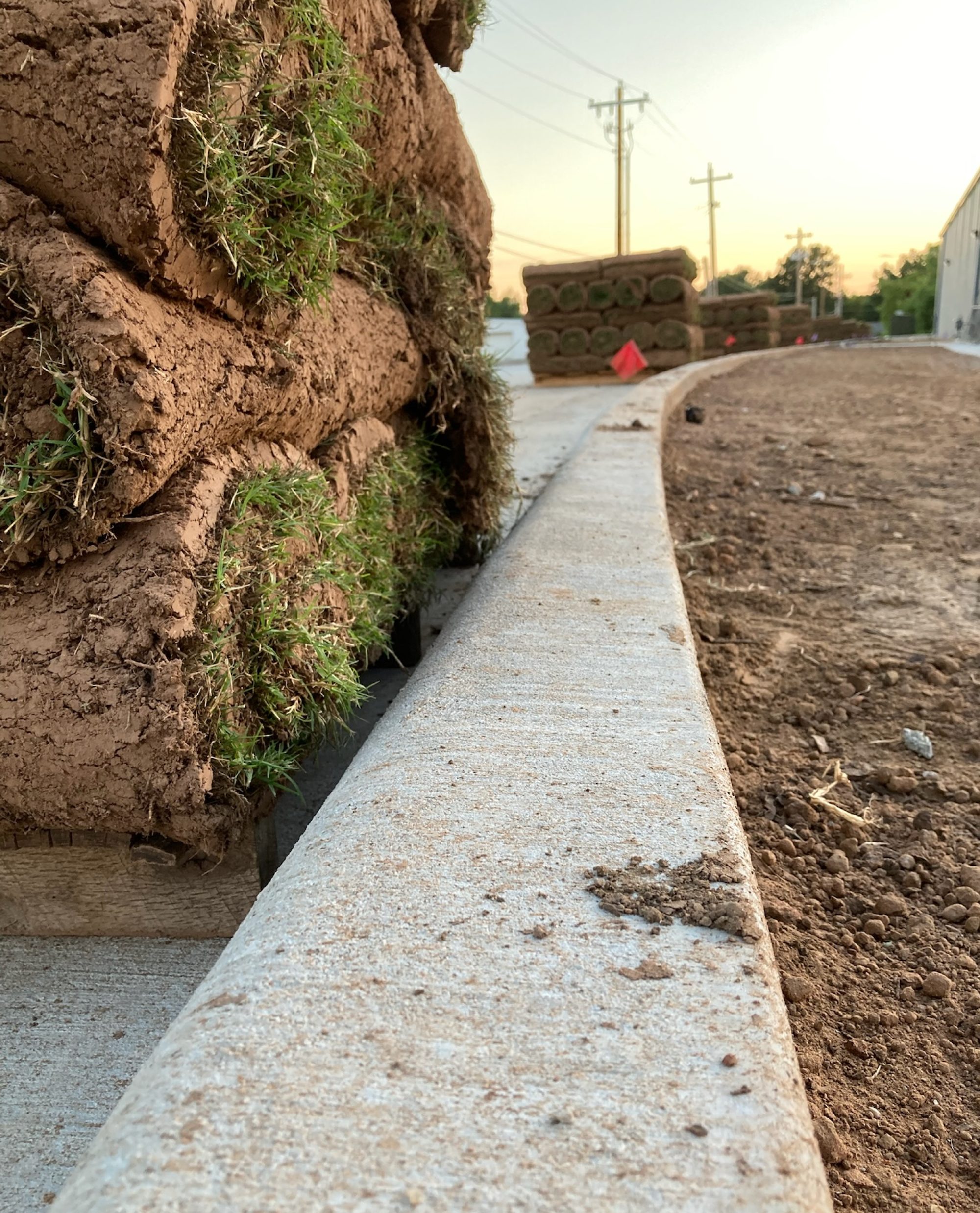
Bermuda sod is a live product with active roots and shoot tissue. Once harvested, it begins drying and consuming internal energy stores. This narrows your transplant window.
- Pickup between 7:00–10:00 AM (Mon–Fri) to receive freshly cut sod.
- Trucks deliver daily across 74429 (Coweta), 74066 (Sapulpa), and 74037 (Jenks) in looped zones to maintain freshness.
- Install within 4–6 hours of harvest. Delay increases desiccation and root tissue damage.
This phase is not unlike transplanting container stock—you want minimal time between removal from the propagation zone and planting into permanent soil.
? Calculate Coverage + Prep Your Ground Like a Rooting Bed
Proper coverage ensures canopy uniformity, minimizes edge stress, and eliminates weed entry points. You’re essentially laying a vegetative mat with built-in roots. The better it contacts the soil, the faster it performs.
- 1 pallet covers ~500 sq ft
- A typical DIY install across Tulsa yards ranges from 5–15 pallets
- Add 5–10% overage to account for trimming, curves, and installation cuts
Soil surface prep:
- Loosen top 1–2 inches (like prepping a liner bed)
- Remove debris and break up crusted areas
- Lightly moisten soil—avoid standing water
Avoid laying sod on bone-dry or compacted clay. Root-to-soil contact must be complete for uptake to start.
? Irrigation: Moisture Scheduling Based on Transplant Recovery
Bermuda sod behaves like any large-scale vegetative liner—it requires immediate and consistent post-plant moisture to bridge from passive hydration (from cutting) to active uptake (from new roots).
Watering Phases:
- Week 1: Light watering 2–3x/day to keep root zone moist
- Week 2–3: Taper to 1x/day, encourage deeper rooting
- Week 4+: Move to every 2–3 days, dependent on rainfall and heat
Edges and corners dry first—target those zones early. Avoid overhead watering at night to limit foliar disease and waste.
? Why Bermuda Performs in This Region — and This Season
Bermuda is ideal for Oklahoma’s July through September growing conditions, especially across heat-prone zones like 74133 (Tulsa) and 74429 (Coweta):
- High rooting speed post-cutting
- Excellent lateral spread under sunlight
- Resilience to foot traffic and sun exposure
- Efficient use of inputs (water, nutrients) once rooted
- Strong competition against weed emergence due to fast canopy density
This species isn’t just drought-resistant—it’s optimized for heat response, making it ideal for post-install survivability even during hot, dry weeks.
? DIY Sod FAQ: Transplanting Logic You Can Follow
Q: How soon after delivery should I lay the sod?
Ideally within 6 hours. Sod starts losing moisture and energy the moment it’s harvested.
Q: Can I store it overnight?
Not recommended. High temps = high respiration. Overnight holding leads to yellowing and reduced root take.
Q: Should I fertilize at installation?
No. Let roots establish first. Begin light feeding after 2–3 mowings (about 3–4 weeks).
Q: Is September too late to install Bermuda sod?
Not at all. September offers great rooting weather—just install before average lows dip below 60°F at night.
? Ready to Reserve Fresh Bermuda Sod This Summer?
Your success depends on timing the transplant window, managing root zone conditions, and using healthy, fresh-cut sod. July–September 2025 provides that exact opportunity across Tulsa, Broken Arrow, Coweta, Jenks, and Sapulpa.
? Call (918)340-3013
? Visit quantumsod.wordpress.com
? Book your 15-minute planning call to calculate square footage, confirm product, and schedule delivery


Discover more from Quantum Sod | Tulsa Oklahoma Sod Supply | Tulsa Oklahoma Sod Delivery | Tulsa Oklahoma Sod Installation (918)340-3013
Subscribe to get the latest posts sent to your email.