July–September Bermuda Sod: The Optimal Window for DIY Lawn Success in Tulsa, Broken Arrow & Coweta
Precision Timing, Root Health, and Environmental Alignment for 2025 Installs
If you’re installing Bermuda sod across Tulsa (74133), Broken Arrow (74012), Coweta (74429), Jenks (74037), or Sapulpa (74066), the July–September period offers a consistent propagation window that aligns plant biology, resource efficiency, and environmental support.
For those handling installation themselves, DIY success depends on timing, root-to-soil contact, moisture control, and understanding how to transition the sod from farm to final rooting. This is a live product in transition—not a finished lawn. Knowing how and when to manage inputs is the difference between failure and full establishment.
?? July, August, and September: Three Phases of Bermuda Sod Establishment
Each month delivers a specific growth opportunity for Bermuda sod. Your management inputs and install tactics should respond accordingly:
July (Initiation + Heat Response)
- Root activation begins immediately in warm soil (75–90°F typical in Tulsa ZIPs like 74133 and 74012).
- Moisture retention is critical; sod must be watered 2–3x daily to maintain hydration.
- Canopy closes quickly with adequate water and sun, minimizing weed exposure.
August (Root Expansion + Stress Monitoring)
- Sod enters aggressive root elongation and lateral spread.
- Taper irrigation gradually to 1x daily, moving toward deeper root training.
- Monitor for heat stress or dry edges, particularly near sidewalks or hardscapes.
September (Maturity + Transition)
- Cooler nights improve root depth and nutrient storage.
- Begin light mowing and nutrient input to encourage dense horizontal growth.
- Sod begins preparing for dormancy, locking in gains made through summer.
Understanding how Bermuda responds to temperature shifts and daylight length ensures you’re not overwatering, overfeeding, or mowing prematurely.
? Sod Pickup & Delivery: Handling a Living Product
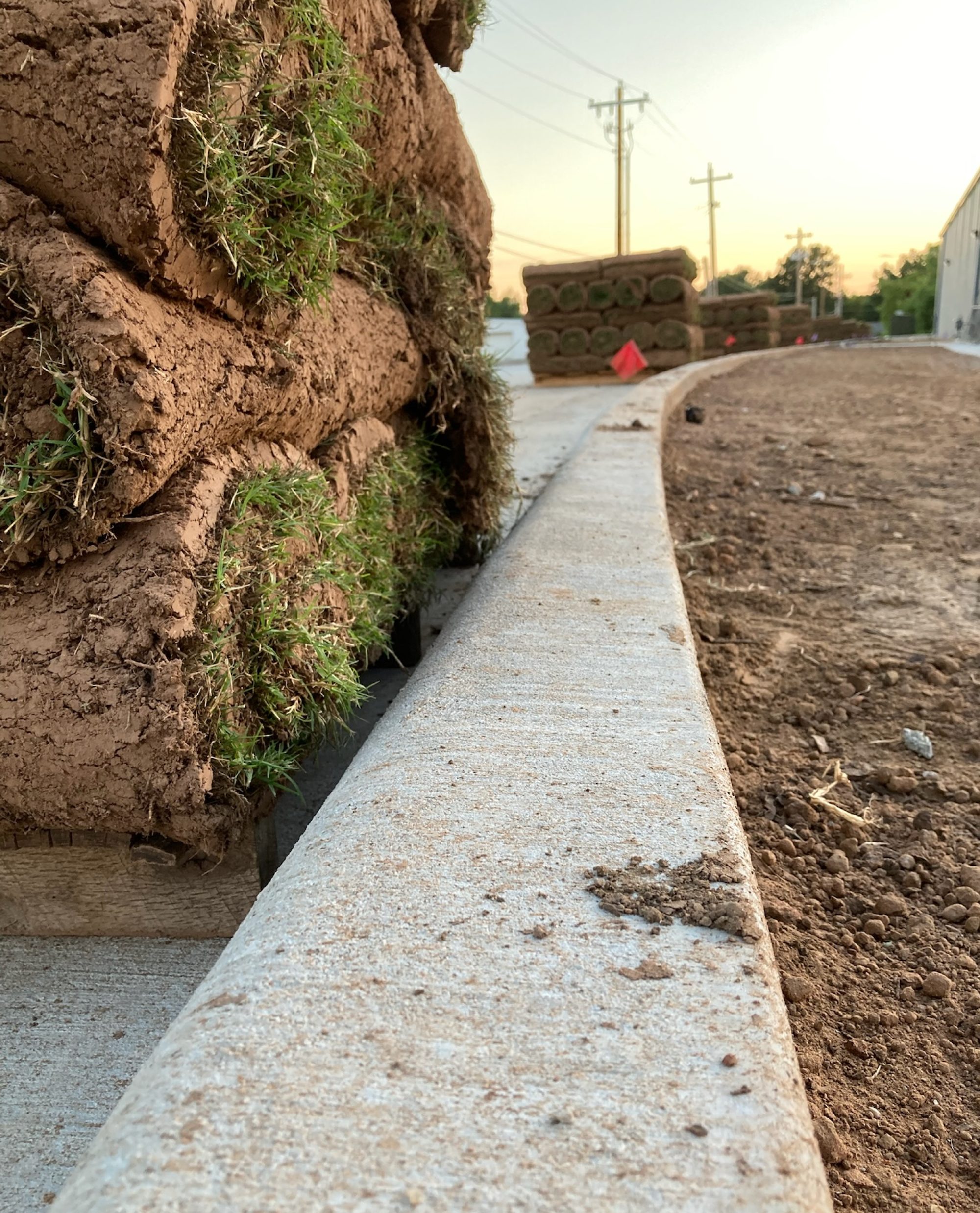
Sod, like any propagated crop, degrades after harvest. You are receiving cut plant material with a limited shelf life. Installation and hydration must happen immediately.
- Pick up from 7–10 AM Monday–Friday to receive freshly cut sod.
- Delivery trucks follow efficient loops through 74012 (Broken Arrow), 74429 (Coweta), and 74066 (Sapulpa) to reduce in-transit holding time.
- Install within 6 hours of pickup/delivery, especially in high-heat conditions.
Delays in install lead to desiccation, reduced rooting potential, and higher mortality—particularly in late July and early August.
? Order the Right Quantity + Prep the Root Zone
DIY sod success hinges on tight installation with no voids or overlaps. Use plantable square footage—not just total lot size—for accuracy.
- 1 pallet = ~500 sq ft
- A 5,000 sq ft install in Jenks (74037) = ~10 pallets
- Add 5–10% extra for trimming, slopes, and waste
Root zone prep should include:
- 1–2″ light tilling or surface roughing
- Debris removal
- Light pre-watering (damp, not soaked)
Sod roots must touch soil, not compacted clay or debris. Think: plug tray soil contact—clean, moist, and friction-tight.
? Why Bermuda Is the Best Sod for This Timing
From a propagation and rooting perspective, Bermuda is optimized for July–September installs in Eastern Oklahoma.
- High stolon and rhizome activity = fast surface coverage
- Fast metabolic response to sun + water = short recovery cycle
- Minimal disease pressure in dry heat (if watered correctly)
- Strong self-repair mechanism post-install
Other varieties like Fescue or Zoysia may survive, but Bermuda thrives in the exact seasonal pattern of this region.
? Moisture Management = Successful Take Rate
Sod doesn’t fail due to bad grass—it fails due to dehydration and air gaps at the root zone. For DIY installs:
Week 1–2 (Initial Take)
- Water 2–3x/day, short cycles (~10–15 min)
- Prevent dry-out between 11 AM–5 PM
- No mowing, no fertilizer, no traffic
Week 3–4 (Root Anchoring)
- Drop to 1x/day watering
- Begin mowing when sod resists pulling
- Apply light starter fertilizer if soil is nutrient deficient
Week 5+ (Stabilization)
- Deep, infrequent watering begins
- Train roots to chase moisture
- Can introduce organic topdress or compost if soil is weak
Monitor edges, slopes, and sunny corners—they dehydrate faster than center zones.
? DIY FAQ: Focused on Propagation Success
Q: Can I install sod in August or September?
Yes. August is excellent for rooting. September is great for long-term turf strength before winter.
Q: Can I install after a rainstorm?
Yes, if soil is moist—not waterlogged. Over-saturation cuts oxygen to roots and slows rooting.
Q: When should I fertilize?
Wait until after roots establish—usually week 3–4. Overfeeding early = runoff + stress.
Q: Can I mow in week 2?
Only if sod resists tugging (anchored). Never mow before rooting—risk of shearing or scalping is high.
? Ready to Schedule Bermuda Sod During the Optimal 2025 Window?
July, August, and early September offer the best biological and environmental conditions for Bermuda sod installation across Tulsa, Broken Arrow, Coweta, Jenks, and Sapulpa.
? Call (918)340-3013
? Visit quantumsod.wordpress.com
? Book your 15-minute call to reserve sod, confirm square footage, and lock in a delivery window


Discover more from Quantum Sod | Tulsa Oklahoma Sod Supply | Tulsa Oklahoma Sod Delivery | Tulsa Oklahoma Sod Installation (918)340-3013
Subscribe to get the latest posts sent to your email.