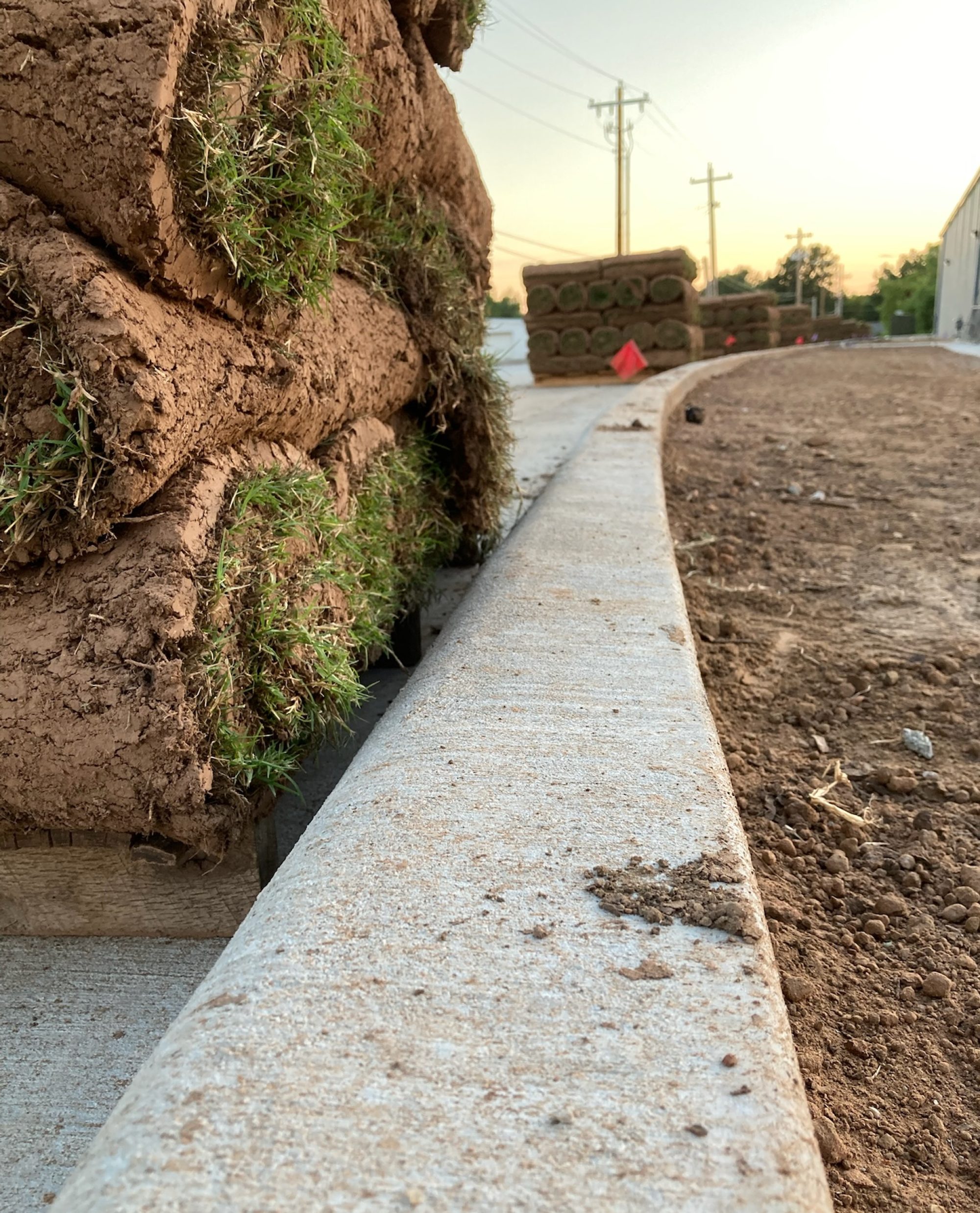
Why July 2026 Sod Delivery Is Restoring Soil Function Across Tulsa
Think You Missed Your Planting Window in Tulsa? Succession Timing Says Otherwise
Worried the hydrologic surge of July makes sod delivery risky?
Uncertain if vegetative establishment this late in the season will stabilize disturbed areas in time?
Think it’s too late to build resilience into your soil profile before winter dormancy?
It’s not. In fact, the current precipitation pattern and evapotranspiration rates across Tulsa and surrounding bioregions are offering a rare convergence of conditions ideal for rapid vegetative establishment and erosion control. In this breakdown, we’ll explore how July rain events impact below-ground biomass formation, why August installations reinforce soil aggregate stability, and how September transitions close the loop on functional vegetative cover—all through the lens of system recovery and landscape performance.
July Rainfall Is Accelerating Root–Soil Symbiosis Across Tulsa’s Disturbed Sites
In July, precipitation doesn’t merely irrigate—it reactivates soil microbial activity and enhances rhizosphere development in ways few homeowners recognize.
When sod is installed during high soil moisture periods, water infiltration occurs at rates that support the establishment of early successional root networks. These networks do more than anchor turf—they initiate biotic exchange between roots and surrounding mycorrhizal fungi, especially in areas like Broken Arrow and Jenks, where soils often face legacy compaction or poor percolation from previous development.
Rain events reduce hydrophobic surface tension, which increases capillary flow to the root zone. In tandem, sod laid during July experiences minimal transplant shock due to improved mesoclimatic buffering. That means better microaggregate formation, higher root penetration per unit energy, and enhanced vegetative cover that begins functioning as an ecological asset—rather than just aesthetic groundcover.
How August Enhances Soil Structure and Biological Integrity in Coweta
By August, vegetative cover shifts from stabilization to integration.
While July rain enables root initiation, August’s thermal profile promotes structural consolidation. In Coweta, Glenpool, and Sand Springs, the early-summer sod laid on transitional or exposed soils begins to exhibit characteristics of mid-successional stabilization. This includes rhizodeposition of exudates that stimulate microbial cohesion, increased soil organic carbon retention near the root interface, and formation of soil macroaggregates that protect against erosion and surface runoff.
With active transpiration still occurring but heat stress beginning to moderate, sod is able to convert more stored carbohydrates into rhizomatous expansion. This densifies the vegetative mat and increases its surface roughness—a key feature that slows surface water velocity and allows for passive sediment capture on sloped or degraded lots.
In 2026, these dynamics are especially significant due to the timing of Oklahoma’s summer rainfall, which is reinforcing stratified water movement through root channels and accelerating the restoration of infiltration capacity in developed landscapes.
By September, You’re Not Just Growing Grass—You’re Restoring Ecosystem Function
The most visible transformation of turfgrass laid in July and August happens in September—not just aboveground, but in how the system behaves.
By now, established sod has developed functional connectivity with subsurface horizons. Root channels act as conduits for oxygen exchange and macrofaunal movement, and evapotranspiration becomes self-regulating. In neighborhoods across Broken Arrow and Coweta, previously compacted or depleted yards now display self-sustaining vegetative cover that buffers stormwater and interrupts thermal loading at the surface.
For contractors, this isn’t just a green install—it’s successful re-vegetation. By aligning sod delivery with phenological opportunity, you’re not just meeting aesthetic goals; you’re achieving slope stability, restoring site hydrology, and increasing the residence time of rainfall within the root zone.
Sod Delivery That Matches Landscape Function and Timing in the Tulsa Metro
Our delivery protocol is designed to work with—not against—natural processes already underway:
- Start with total square footage.
This determines vegetative density required for full surface coverage and mitigates patchy establishment that invites edge effects or invasive colonization.
(For reference: 500 sq ft = one-car driveway; 10,000 sq ft = a full athletic field.) - Select the appropriate cultivar: Bermuda, Fescue, or Zoysia.
Each has differing evapotranspiration rates, rooting depth profiles, and tolerance to traffic or low fertility zones. - We route by zip code to optimize delivery within peak viability timeframes post-harvest, protecting live root tissue from respiration decline.
- A delivery window is assigned that considers solar load, relative humidity, and predicted rainfall—to promote successful transplant conditions.
- Live confirmation + consistent communication.
Ensures sod arrives fresh, hydrated, and biologically viable, with minimized lag time from cut to contact with receiving soils.
Whether you’re in Tulsa, Claremore, or Bixby, this model respects the soil’s readiness for vegetative reintroduction and honors the physiology of the turf species selected.
Restoration-Grade Results for Any Property Owner or Project Scope
? For Homeowners Across Tulsa and Surrounding Suburbs:
Even if you’re not managing a post-construction erosion site, your backyard still behaves like a disturbed landscape—especially if topsoil has been stripped, compacted, or left unplanted.
By installing 5,000–10,000 sq ft of sod during Tulsa’s July rains, you’re doing more than installing grass—you’re initiating succession. That’s how dormant or degraded lawns can transition into functional, low-maintenance groundcover by fall. Moisture availability supports root exudate production, which in turn builds structure and suppresses weed intrusion.
And thanks to service windows coordinated with current weather systems, your sod receives the atmospheric support it needs to stabilize and perform without synthetic inputs or heavy irrigation.
?? For Contractors and Restoration Project Leads:
For job sites exceeding 10 pallets across Coweta, Bixby, Glenpool, and Claremore, you’re often tasked with restoring vegetative continuity as well as aesthetics.
Our high-volume delivery system supports that goal—coordinated to avoid soil compaction during drop-offs, and sequenced around hydrologic windows that promote capillary recharge post-install. Whether you’re stabilizing medians, infill lots, or commercial pads, turf laid under these July–August conditions roots deeper, intercepts runoff faster, and accelerates the transition from disturbance to resilience.
You’re not just laying sod—you’re closing the loop on land recovery.
Ready to Restore Your Yard or Jobsite in Tulsa?
The window is open—but not for long. These next few weeks in July and August 2026 present the best conditions we’ve seen in years for establishing functional, durable sod cover in Tulsa and surrounding zones.
? Call (918)340-3013 to schedule your delivery
? Just share your square footage and zip — we’ll handle the rest
? Need help picking the right turf? Grab our Master Sod Comparison Sheet
? Prefer a walkthrough? Book your 15-minute site planning consult today
? Visit quantumsod.wordpress.com to begin restoring your landscape
Discover more from Quantum Sod | Oklahoma Sod Supply | Oklahoma Sod Delivery | Oklahoma Sod Installation (918)340-3013
Subscribe to get the latest posts sent to your email.