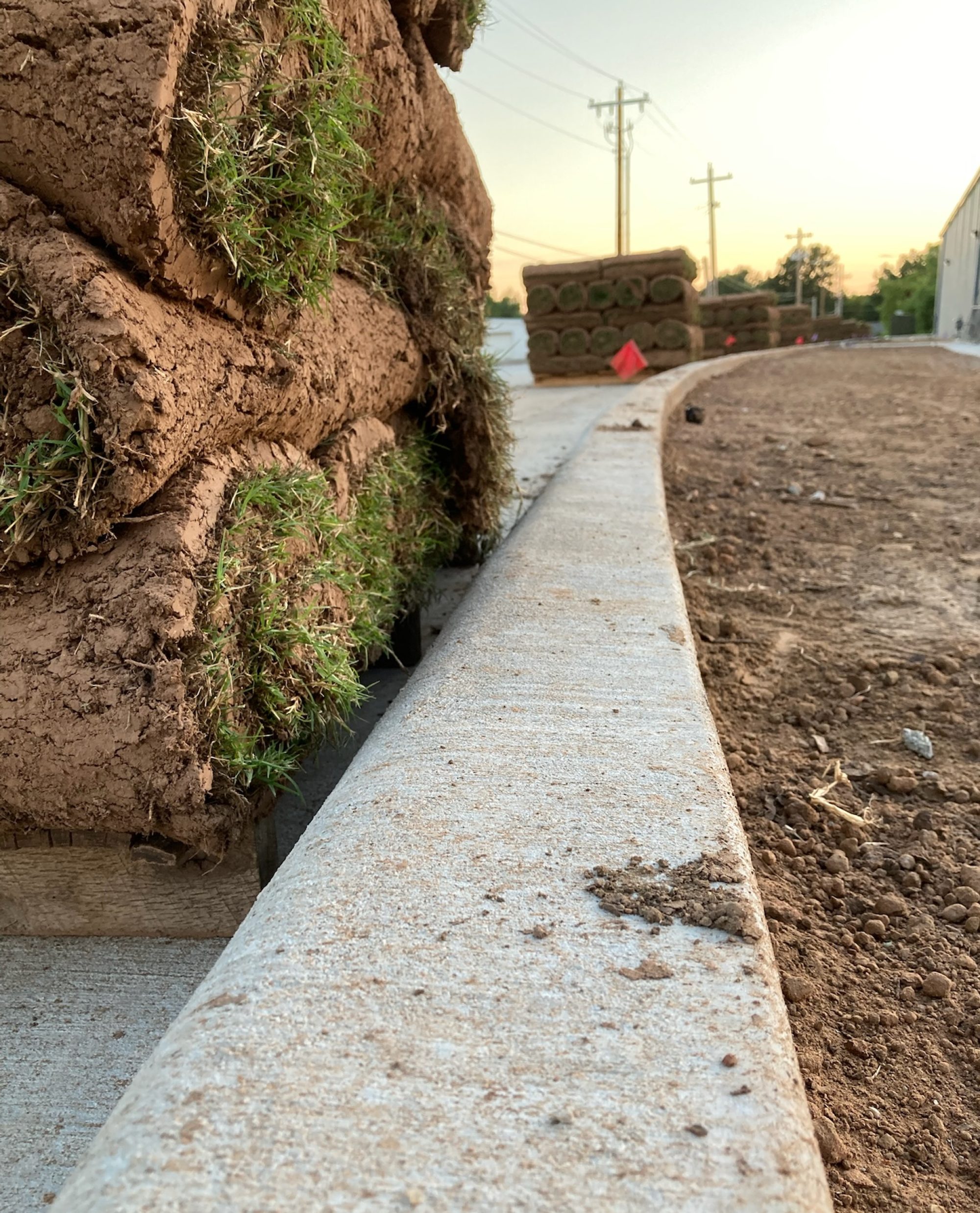
July 2026 Sod Installations Across Tulsa Are Rooting Faster Than Ever
Think You Missed Sod Season in Tulsa? Photosynthetic Windows Say Otherwise
Have you assumed the summer heat in Tulsa shuts down your lawn’s potential for establishment?
Are you hesitating because of fluctuating rainfall or unsure how water availability interacts with root initiation?
Do you believe you’ve missed the optimal planting window for perennial turfgrass development?
In truth, July through September is when the soil–plant–atmosphere continuum is working in your favor—especially in 2026. This breakdown will walk through why this weather system supports rhizogenesis, how rainfall supports hormonal gradients in root tissues, and why your window for sod installation across Tulsa, Coweta, and Broken Arrow is not only open—it’s ideal.
July Rainfall Is Optimizing Hormonal Conditions for Root Induction Across Tulsa
To the untrained eye, July’s precipitation may seem like a scheduling inconvenience. But for those who understand auxin-driven meristem activation and apoplastic water flow, it’s a different story.
Rainfall during sod installation coincides with a critical physiological shift in newly severed sod. When harvested, turfgrass sod undergoes rapid hormonal redistribution, especially in indole-3-acetic acid (IAA) concentrations near the root-shoot junction. Moist soil encourages lateral root initiation by enhancing auxin mobility and increasing cell elongation capacity via turgor-driven expansion. This is particularly effective in Bermuda and Fescue cultivars with fibrous root systems.
In Tulsa and neighboring regions like Jenks and Owasso, July’s soil temperature and moisture profile create a nearly perfect osmotic environment for reestablishing vascular connectivity. The rainfall doesn’t merely hydrate; it facilitates root primordia emergence through softened, aerated substrates.
August Rain in Coweta Is Enhancing Subsurface Carbon Allocation and Cell Differentiation
As August rainfall continues, plants transition from initial rooting into active resource partitioning. At this stage, a healthy turfgrass sward isn’t just holding the soil—it’s mobilizing photosynthates for long-term establishment.
Root sink strength increases during mid-summer due to the elevated phloem unloading rate. That means carbohydrates generated via photosynthesis in maturing leaves are now being translocated downward—supporting mitotic activity in the root apical meristem. Moisture-rich soils in Coweta, Glenpool, and Sand Springs reduce the metabolic cost of this process by decreasing xylem tension and improving water use efficiency.
When sod is installed during this physiologically plastic phase, you reduce the need for exogenous irrigation while simultaneously triggering adventitious root expansion. Every pallet installed in August 2026 carries the potential to surpass previous years’ rooting depth benchmarks, especially when properly matched to local edaphic conditions.
September: The Chlorophyll Payoff from July’s Root Work Across Broken Arrow and Beyond
By September, much of the root architecture initiated in July has already undergone secondary growth. The visible transformation above ground—the dense, photosynthetically vibrant canopy—reflects the unseen complexity below.
With longer photoperiods tapering off and evapotranspiration rates declining, established sod enters a phase of optimized leaf-to-root ratio. This is the point when the plant’s internal resource economy begins to stabilize. In Broken Arrow, Coweta, and Bixby, lawns laid in early July exhibit higher chlorophyll concentrations and greater canopy density by mid-September, a sign of fully integrated vascular function and maximized light interception.
In layman’s terms: your lawn becomes a living photosynthetic engine—dense, durable, and self-sustaining by the time dormancy approaches.
The Sod Delivery Process That Supports Turfgrass Physiology Across the Tulsa Metro
Physiology informs logistics. Here’s how sod delivery is structured to match the turf’s needs during the most biologically receptive months:
- Start with total square footage.
Coverage estimates help determine both the delivery load and hydration rate post-install.
(500 sq ft = one-car driveway; 10,000 sq ft = baseball infield.) - Confirm the cultivar (Bermuda, Fescue, Zoysia).
Each species exhibits unique responses to photoperiod, rooting hormones, and soil composition. Selection matters. - Zip code–based routing.
Ensures sod reaches your site within the optimal viability window post-harvest, reducing desiccation-related losses in root viability. - Assigned service windows to preserve leaf turgidity and root pressure.
- Live phone confirmation and ongoing communication.
From dispatch to unloading, minimizing exposure to ethylene buildup or temperature shock during transport.
With this system, Quantum Sod maintains the physiological integrity of every blade—regardless of whether you’re in central Tulsa or out toward Claremore.
Two Use Cases, One Biological Advantage
? For Homeowners Across Tulsa and Surrounding Areas:
If you’re a homeowner managing 5,000–10,000 sq ft of property, July’s rainfall can do what a $10,000 irrigation system can’t: provide uniform, low-salinity hydration across your entire root zone. When sod is installed during periods of consistent rainfall, water enters through both mass flow and capillary action—delivering nutrients and hormones with minimal osmotic stress.
Service windows protect turf from thermal degradation in transit, and install timing during soil moisture peaks increases your lawn’s drought resistance well into the fall.
?? For Contractors and Project Coordinators:
For project sites needing 10+ pallets across Coweta, Claremore, Glenpool, or Bixby—logistical precision isn’t just a convenience, it’s a physiological necessity. Sod that arrives within 6–8 hours of harvest retains active cell membranes, viable root hairs, and uncompromised chloroplast integrity.
Our dispatch system supports high-volume drops with site-specific scheduling that respects environmental parameters. Whether you’re prepping for a municipal install or a commercial buildout, your timeline aligns with each species’ metabolic window for root elongation and lateral expansion.
Lock In Your Sod Delivery While the Biological Window Is Still Open
July and August 2026 won’t repeat themselves. Rainfall, solar radiation, and soil temperature are aligning right now to support long-term root establishment.
? Call (918)340-3013 to schedule delivery while the soil is still physiologically receptive
? Just tell us your square footage and zip code — we’ll handle the rest
? Need to choose between Bermuda, Fescue, or Zoysia? Download our Master Sod Comparison Sheet
? Or schedule your 15-minute expert consult call to plan the install around your site conditions
? Start today at quantumsod.wordpress.com
Discover more from Quantum Sod | Oklahoma Sod Supply | Oklahoma Sod Delivery | Oklahoma Sod Installation (918)340-3013
Subscribe to get the latest posts sent to your email.