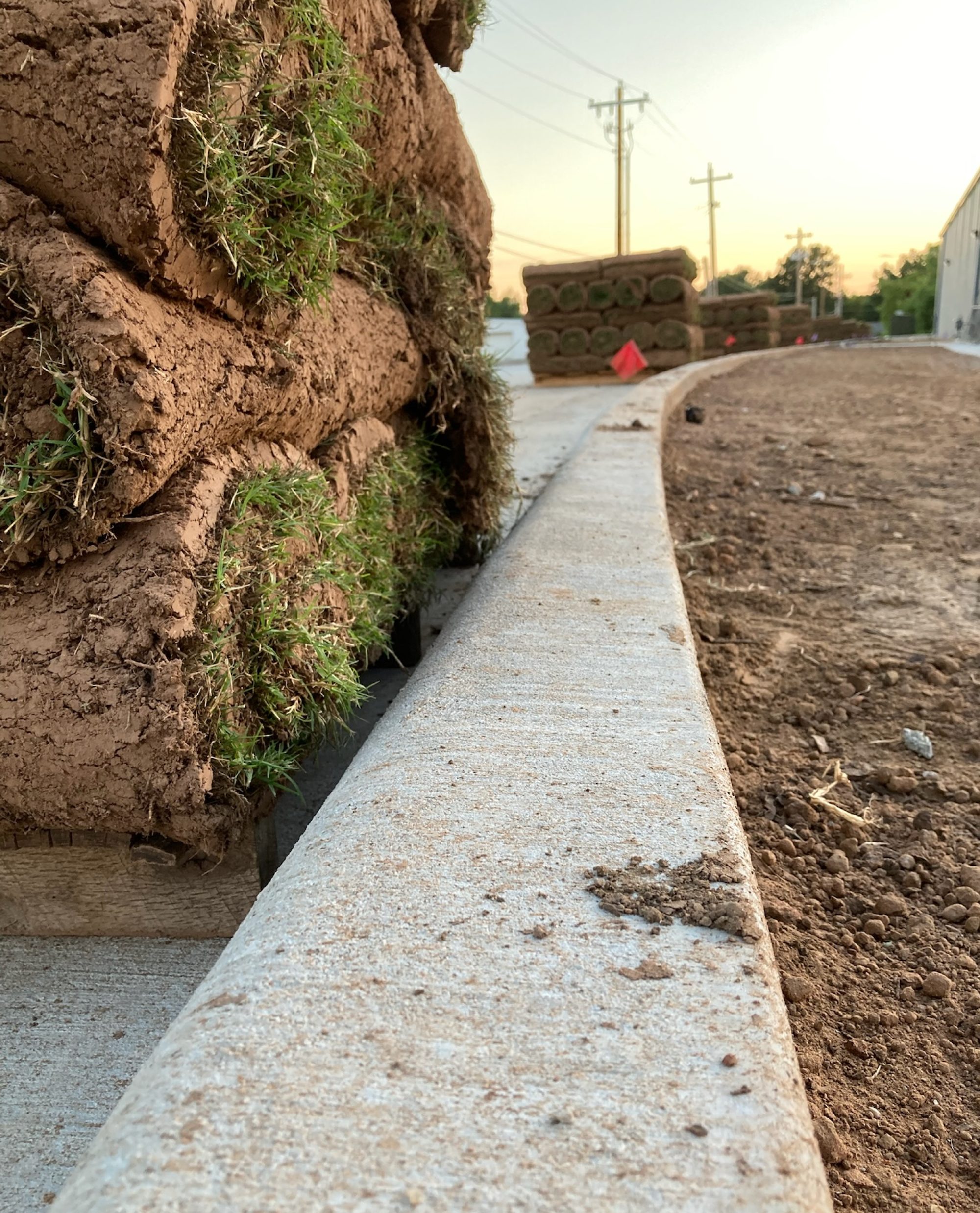
July 2026 Sod Delivery Is Shaping Tulsa’s Landscapes From the Soil Up
Think July Is Too Late for Installation? It’s Actually the Most Strategic Phase of the Site Lifecycle
Are you questioning whether your window for turf establishment has closed?
Concerned that summer rain and project phasing don’t align for proper vegetative install?
Not sure if your site can support full lawn establishment before the fall maintenance schedule hits?
In fact, July through September 2026 is a highly efficient window for softscape implementation—especially across the Tulsa metro and surrounding municipalities like Broken Arrow, Coweta, and Jenks. This article will walk you through why the timing aligns with ideal post-grading soil performance, how short-term precipitation patterns can reduce mechanical irrigation dependency, and how to align sod delivery with your master plan’s broader spatial and functional goals.
Why July Rainfall Supports Turf Integration and Site Stabilization Across Tulsa
For those trained to think in terms of land systems, stormwater flow, and final grading tolerances—July rainfall isn’t an obstacle. It’s an accelerator.
Sod installed after final grade benefits from moisture-amended topsoil that improves soil-plant contact at the rhizoplane. The result? Better adhesion, reduced air gaps beneath sod rolls, and more immediate root bridging into native or amended soils. In Broken Arrow and Jenks, where red clay content tends to reduce infiltration, the added surface moisture increases capillary pull into the root zone—particularly beneficial for Fescue and Bermuda cultivars.
From a construction sequencing standpoint, July installation fits seamlessly between hardscape finalization and planting of ornamental beds. With turf acting as the primary horizontal circulation buffer between program zones (i.e., patios, pathways, and play areas), early establishment ensures usable green space by the time vertical plantings mature.
When framed correctly within the site’s hydrology and user flows, July sod delivery supports both aesthetic cohesion and ecological performance.
August’s Thermal Profile Reinforces Lawn Infrastructure in Coweta and Surrounding Towns
By August, sod transitions from passive coverage to an active part of your stormwater management strategy.
As temperatures remain high but rainfall continues, established sod layers begin functioning as green infrastructure. With the right soil subgrade and base compaction (typically at 85%–90% Proctor for turf areas), root establishment enhances percolation rates and mitigates localized ponding—a recurring issue in Coweta and Glenpool during late summer storms.
From a section detail perspective, August sod expands root volume downward into the rootable soil layer, interacting with aggregate transition zones (where used) and tying into French drain systems or catchment areas, if applicable. This is particularly critical for larger lots with minimal grade variation, where sod plays both aesthetic and hydraulic roles.
Professionally, this stage also aligns with post-installation site reviews and the commissioning of maintenance protocols. Landscapes installed during August often show stronger survivability through the fall because they’ve been synchronized with regional evapotranspiration curves and require less intensive post-occupancy irrigation.
September Outcomes: From Green Coverage to Functional Outdoor Rooms
What begins in July as sod installation becomes, by September, a living spatial material defining the use and comfort of exterior spaces.
Across Broken Arrow, Tulsa, and Claremore, we’re seeing projects that installed sod early in Q3 2026 now offering fully integrated outdoor environments. These lawns aren’t just biologically established—they’re actively performing within the site’s circulation hierarchy, passive use zones, and ecological flow paths.
In design terms, turfgrass has spatial weight. It frames viewsheds, anchors planting palettes, and acts as transitional texture between built elements and native edge conditions. By September, well-established sod can support programmed activity: gathering, play, circulation, or simply serving as thermal and acoustic softscape buffering adjacent to built structures.
From a long-term stewardship standpoint, lawns installed by late July require fewer fall inputs (overseeding, aeration, fungicides) due to their full root anchoring and canopy density. By coordinating sod delivery with design development and construction administration phases, these landscapes are setting performance precedents—not just visual ones.
How Sod Delivery Supports Final Grading and Landscape Performance Across the Tulsa Metro
Our sod delivery approach aligns with how landscape systems actually function, especially when integrated during Phase III or IV of a landscape implementation plan:
- Submit total square footage.
This ensures accurate material ordering, edge condition detailing, and roll-out efficiency.
(Visualize: 500 sq ft = a compact auto court; 10,000 sq ft = a programmed athletic field.) - Select your turf species.
Bermuda for high-sun, high-traffic spaces; Fescue for shaded or transitional microclimates; Zoysia for hybrid use zones with balanced aesthetics and durability. - Logistics are planned by zip code to reduce holding time post-harvest and prevent thermal stress or dehydration en route.
- You’re assigned a delivery window aligned with local climate data and optimal install hours (early morning or early evening drop-offs preferred).
- Real-time confirmation and communication.
Protects your install crew’s schedule, and ensures sod is laid within the photosynthetic viability window—typically 8–10 hours post-harvest.
For projects across Tulsa, Coweta, and Bixby, this system respects both biological timing and construction logistics, ensuring sod becomes a functional component—not just a decorative one.
Solutions Tailored for Every Site: From Private Lawns to Programmed Job Sites
? For Homeowners Designing Usable Outdoor Space:
If your property ranges from 5,000–10,000 sq ft, your lawn isn’t just turf—it’s an extension of your home’s programming. Think children’s play zones, visual respite, dog runs, or transitional space from rear patios to utility zones.
With July rainfall acting as natural irrigation and high soil saturation improving roll-out conditions, sod establishes quickly and cleanly. You gain functional green space within 14–21 days of install—just in time for autumn usability.
Delivery windows help you plan around irrigation access, hardscape work, and even upcoming events. From a lifestyle design perspective, this is the last high-function window for large-scale lawn installation in 2026.
?? For Contractors and Landscape Teams Managing Active Sites:
For contractors delivering over 10 pallets to locations like Glenpool, Claremore, or Owasso, timing and logistics are key.
- Bulk delivery aligns with final walkthroughs and closeout timelines.
- Sod type selection supports ADA-accessible transitions, HOA compliance, or LEED landscape credits (when applicable).
- Truck routing avoids site congestion, and window scheduling supports your Gantt chart rather than disrupts it.
Sod laid in July and August roots deeper due to sustained subgrade moisture and supports post-install evaluations. Whether you’re delivering for municipal parks, spec homes, or educational campuses, turf installed under these climatic conditions integrates into the site system with minimal maintenance.
Ready to Schedule Sod Delivery in Tulsa?
Let’s get your green space functional before the window closes. July and August 2026 are perfectly timed for both visual impact and ecological performance.
? Call (918)340-3013 to get on the route
? Provide your square footage and zip — we’ll handle the rest
? Need help choosing the right turf for your site programming? Download our Master Sod Comparison Sheet
? Or book your 15-minute phone consult to align install with your overall construction schedule
? Visit quantumsod.wordpress.com to start planning


Discover more from Quantum Sod | Tulsa Oklahoma Sod Supply | Tulsa Oklahoma Sod Delivery | Tulsa Oklahoma Sod Installation (918)340-3013
Subscribe to get the latest posts sent to your email.